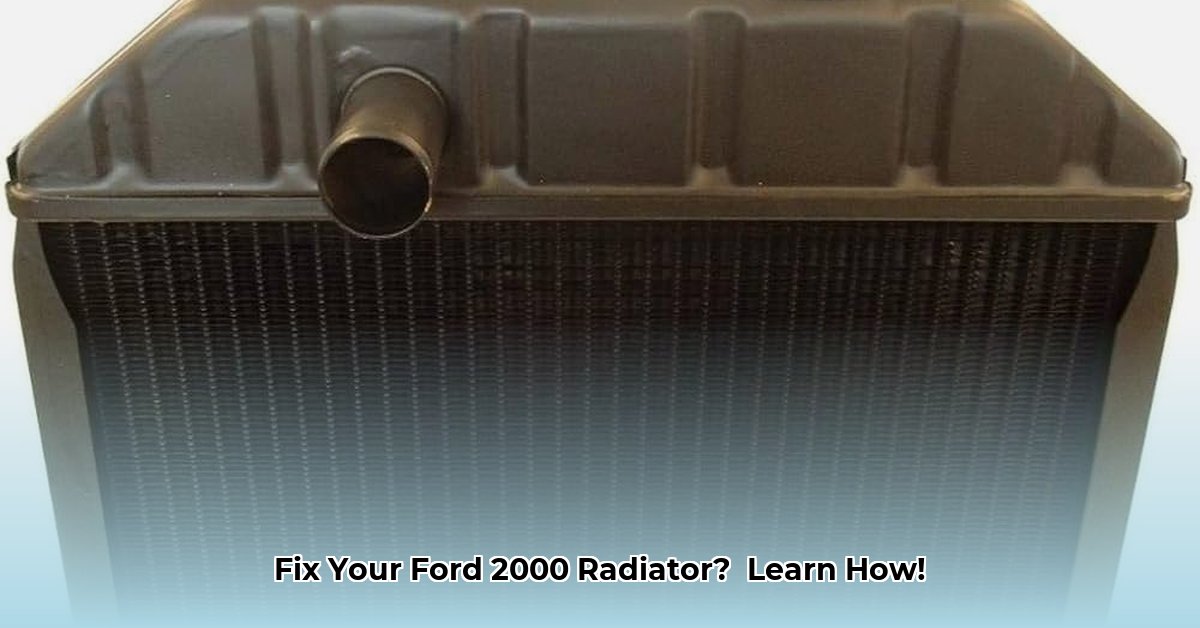
Keeping your Ford 2000 tractor running smoothly requires diligent attention to its cooling system. The radiator, a critical component, prevents overheating and costly engine damage. This comprehensive guide will walk you through troubleshooting, selecting a replacement (whether OEM or aftermarket), and installing it safely and effectively. For detailed specifications on your Ford 2000, check out this helpful resource: Ford 2000 Specs.
Understanding Your Ford 2000 Tractor Radiator
Your Ford 2000's radiator is the heart of its cooling system, responsible for dissipating engine heat and maintaining optimal operating temperatures. The original equipment manufacturer (OEM) part number is often C7NN8005H, but equivalent parts may exist. Proactive maintenance is key to preventing major issues. Did you know that a properly maintained radiator can extend the life of your engine by up to 20%?
Troubleshooting Your Ford 2000 Radiator
Before purchasing a replacement, determine if the radiator is indeed the source of the problem. Several symptoms indicate potential radiator issues:
- Low Coolant Levels: A significant drop in coolant suggests a leak. Carefully inspect the radiator for cracks, rust, or other damage.
- Damaged Hoses: Worn or damaged hoses can also cause leaks. Thoroughly examine all cooling system hoses.
- Faulty Radiator Cap: A malfunctioning radiator cap can disrupt system pressure, leading to overheating. Replacing the cap is a simple, inexpensive fix to try first.
- Hidden Leaks: A pressure test by a qualified mechanic can pinpoint hard-to-find leaks within the cooling system.
Choosing a Replacement Radiator: OEM vs. Aftermarket
If a faulty radiator is confirmed, choosing a replacement requires careful consideration. The OEM Ford part (C7NN8005H) guarantees a perfect fit and reliable performance, but comes at a higher price. Aftermarket options are often cheaper, but quality and longevity can vary significantly.
| Radiator Part Number | Manufacturer | Advantages | Disadvantages | Important Considerations |
|---|---|---|---|---|
| C7NN8005H | Ford | Guaranteed fit, proven reliability, superior quality | Higher price | Widely available from reputable parts suppliers. |
| TISCO E0NN8005MD15M | TISCO | Potentially lower cost | Unknown long-term performance, potential fit issues | Compare dimensions (core size, inlet/outlet) carefully. Measure twice before purchasing. |
| Other Aftermarket | Various | Price variability; potentially good value | Variable quality control; risk of poor fit or failure | Thorough research and online reviews are crucial before buying an aftermarket radiator. |
Remember: Always verify dimensions (core size, inlet/outlet placement, and mounting hole spacing) before purchasing any radiator to ensure a proper fit. Incorrect dimensions will complicate installation.
Installing Your New Ford 2000 Radiator: A Step-by-Step Guide
Replacing a tractor radiator requires precision and care. Follow these steps precisely:
- Drain the Coolant: Use a suitable container to catch the coolant. This prevents a significant mess.
- Disconnect Hoses and Clamps: Carefully disconnect all hoses and clamps connected to the old radiator.
- Remove the Old Radiator: Gently remove the old radiator; it might require some effort.
- Install the New Radiator: Carefully align the new radiator with the mounting points.
- Reconnect Hoses and Clamps: Securely reattach all hoses and clamps, tightening them appropriately—avoid over-tightening.
- Refill with Coolant: Use the correct type and mixture recommended in your Ford 2000's owner's manual.
- Bleed the Air: Remove air pockets from the system. Refer to your owner's manual for specific bleeding instructions. This step is crucial for optimal cooling.
- Test Run: Start the tractor and monitor the temperature gauge to ensure proper cooling. A properly functioning cooling system should maintain consistent engine temperatures.
Caution: If you are uncomfortable performing any of these steps, consult a qualified mechanic.
Preventative Maintenance for a Long-Lasting Radiator
Preventative maintenance extends radiator life and prevents costly repairs. Follow these recommendations:
- Regular Coolant Flushes: Flush and replace coolant according to your owner's manual's recommendations.
- Hose Inspections: Regularly inspect all hoses for wear and tear; replace damaged hoses promptly.
- Coolant Level Checks: Frequently monitor coolant levels, adding coolant as needed.
- Temperature Gauge Monitoring: Regularly check your tractor's temperature gauge; unusual readings indicate potential problems.
By following these preventative maintenance steps, you’ll significantly enhance your radiator's lifespan and the overall health of your tractor's cooling system. Proactive care is far less expensive than reactive repairs.
Comparing Ford Tractor Radiator C7NN8005H Alternatives: A Detailed Guide
Finding the right replacement for your Ford 2000 tractor's C7NN8005H radiator can be challenging. Aftermarket radiators frequently advertise a 13.5" center-to-center bolt spacing, differing from the actual 15" spacing on many Ford 2000 models (particularly the 1973 UK model). This discrepancy highlights the critical importance of precise measurements.
Identifying Your Needs and Measuring Your Radiator
Before comparing alternatives, accurately measure the bolt spacing on your existing radiator. Use a ruler or tape measure and double-check your measurements. This precise measurement is crucial for finding a compatible replacement. A small difference can render a radiator incompatible.
Comparing Aftermarket Options
Many aftermarket radiators claim compatibility with the C7NN8005H. However, always meticulously examine product listings, paying particular attention to dimensions, especially mounting hole spacing. Contact suppliers directly to confirm compatibility using your precise measurements. Online forums, such as Yesterday's Tractors, can provide valuable insights and firsthand experiences.
Considering Alternative Radiators
If a direct replacement proves difficult to find, consider radiators designed for other Ford tractor models. Some users have reported success using radiators intended for the Ford 3000 series. However, again, precise measurements and verification are paramount. Adjustable mounting brackets might overcome minor dimensional discrepancies.
Sourcing, Installation, and Safety Precautions
Once you've chosen a replacement, carefully review the manufacturer's installation instructions. Proper installation is essential for performance and safety. Seek professional help if you're unsure about any step of the process. Remember: safety first. Never work on a hot engine and use appropriate safety gear like gloves and eye protection.